
Indian weddings are multi-day celebrations featuring traditions like the Mehndi, Sangeet, Baraat, Hindu ceremony, and reception. Each event combines cultural rituals, music, family traditions, and high-energy celebrations that create an unforgettable wedding experience.
Indian weddings are unlike any other celebration in the world. They are immersive, multi-day, deeply spiritual, and built around traditions that carry centuries of meaning. As a DJ who has worked Indian and Indian-American fusion weddings for many years through DJ Cutt Entertainment, I've seen firsthand how powerful these celebrations become when they're planned with genuine cultural understanding and executed with the right music, the right pacing, and the right team. This guide covers every major event in a traditional Indian or Hindu wedding weekend, what each one means, how the music works, and what couples need to know to plan a celebration that honors tradition and feels completely their own.
Indian weddings are not built around a single ceremony and reception. They are a series of interconnected events spanning multiple days, each with its own purpose, emotional tone, and musical style from intimate spiritual rituals to high-energy dance celebrations to deeply emotional family farewells.
In simple terms, where an American wedding focuses primarily on the ceremony and reception, an Indian wedding treats every day of the weekend as equally significant. The events leading up to the marriage are not just pre-parties; they are rituals with real spiritual and cultural weight. Each event builds toward the next, creating an emotional arc across the entire weekend that the single-day American format simply doesn't have.
This matters for planning because each event has different music requirements, different sound needs, different logistical demands, and different emotional registers. A DJ who understands Indian weddings knows how to shift between all of those registers fluidly from the reverent quiet of a Ganesh Puja to the electric energy of a Sangeet night to the tearful intimacy of a Vidaai. That range is what the weekend requires, and getting it right is what separates a genuinely great Indian wedding from one that was technically fine but missed the depth. At DJ Cutt Entertainment, this is exactly the kind of work we're built for.
Pre-wedding rituals like the Ganesh Puja and Mehndi ceremony focus on blessings, preparation, and family connection. They are more intimate and spiritual in tone than the later celebrations and require a quiet, respectful environment not DJ equipment in most cases, but intentional music curation that supports the atmosphere without overwhelming it.
The Ganesh Puja is typically the first event of the wedding weekend. This ritual invokes Lord Ganesha to remove obstacles and bring good fortune to the couple. Attended by close family and guided by a priest, it's a ceremony that requires calm and reverence above everything else. The music in this setting if any is used should be traditional devotional in nature, low in volume, and completely in service of the priest and the ritual rather than the entertainment.
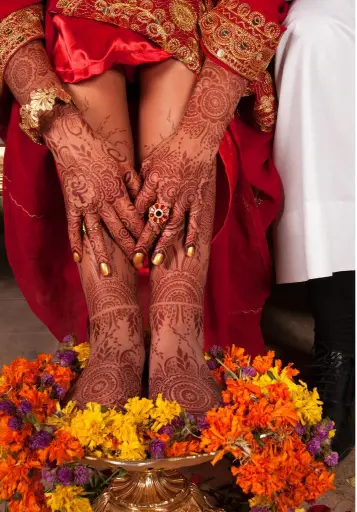
The Mehndi ceremony that follows is one of the most visually stunning events of the weekend. The bride receives intricate henna designs on her hands and feet while guests often receive smaller designs of their own. The atmosphere is relaxed, joyful, and social and this is where curated music starts playing a meaningful role. Light Bollywood love songs, acoustic Indian music, or chill fusion tracks work beautifully here because they create a festive backdrop that supports conversation without competing with it. The Mehndi sets the tone for the celebrations to come without rushing toward them.
The Sangeet is the Indian wedding weekend's signature music and dance celebration traditionally hosted by the bride's family and now often a full-scale evening event featuring choreographed family performances, emotional tributes to the couple, and high-energy dancing that blends Indian and Western music.
In modern Indian-American weddings, the Sangeet has evolved into one of the most anticipated events of the entire weekend. Families prepare performances weeks in advance. Both sides compete playfully through dance. Personal tributes get mixed with humor, love, and occasionally a few friendly roasts. For guests who have never attended an Indian wedding before, the Sangeet is often the moment that fully immerses them in what makes these celebrations so extraordinary.
From a DJ and production standpoint, the Sangeet is one of the most technically demanding events to execute well. Music must be cued precisely for every performance. Microphones need to be managed for announcements, speeches, and hosted segments. The dance floor has to stay energized between scheduled performances without losing the crowd's attention. And the music itself needs to move fluidly between Bollywood, hip-hop, pop, EDM, and whatever else the couple and their families love because this is exactly where Indian-American fusion weddings express the full range of who the couple is.
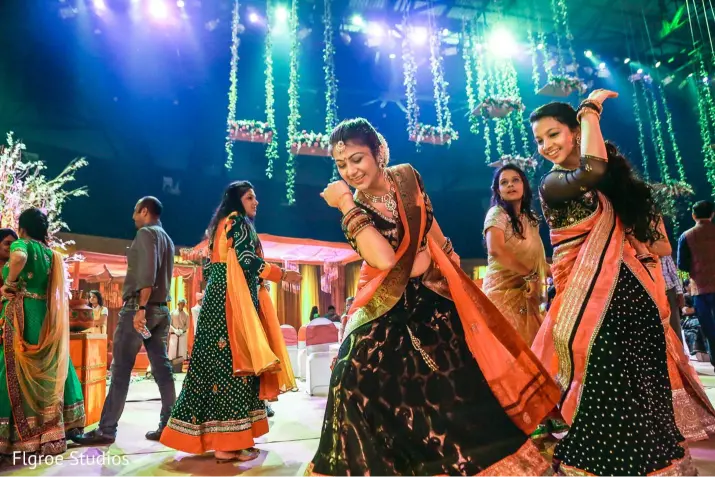
Garba and Dandiya nights are traditional Gujarati celebrations that feature circular dance (Garba) and rhythmic stick dancing (Dandiya). They are joyful, inclusive, and high-energy and they require open floor space, carefully sequenced traditional music, and some guest guidance for those unfamiliar with the dances.
Garba is performed in circular patterns around a central lamp or image, symbolizing unity and the cycle of life. Dandiya involves colorful sticks and follows a rhythmic partner-based format. Both are genuinely participatory; the goal is for every guest to be on the floor, not watching from the sidelines which makes music selection and pacing critical. The right sequence of songs builds energy gradually so guests find their rhythm before the tempo peaks.
For guests who grew up with these dances, Garba night feels like coming home. For guests who haven't experienced it before, it can feel intimidating initially but usually becomes one of the most genuinely fun moments of the whole weekend once they're in the circle. When done well, Garba and Dandiya nights become the highlight guests talk about for years. The venue needs to support it with open floor space, and the DJ needs to know the tradition well enough to guide the energy correctly throughout the evening.
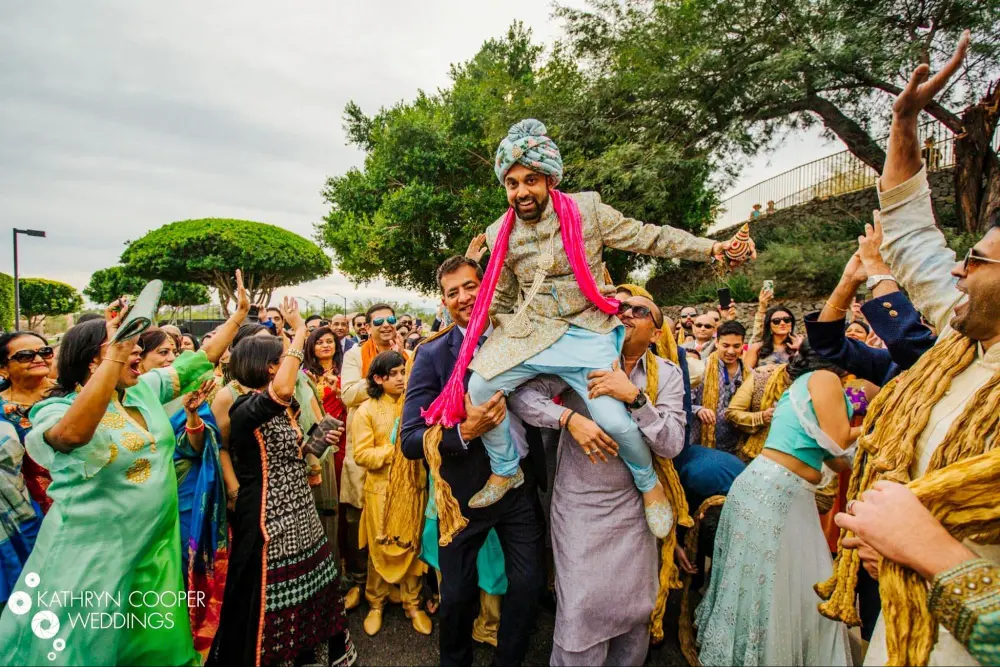
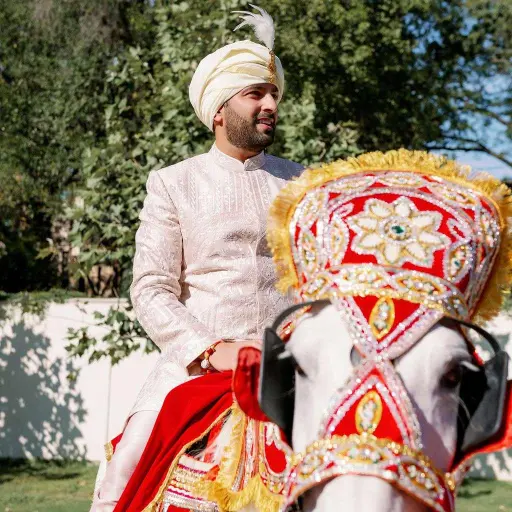
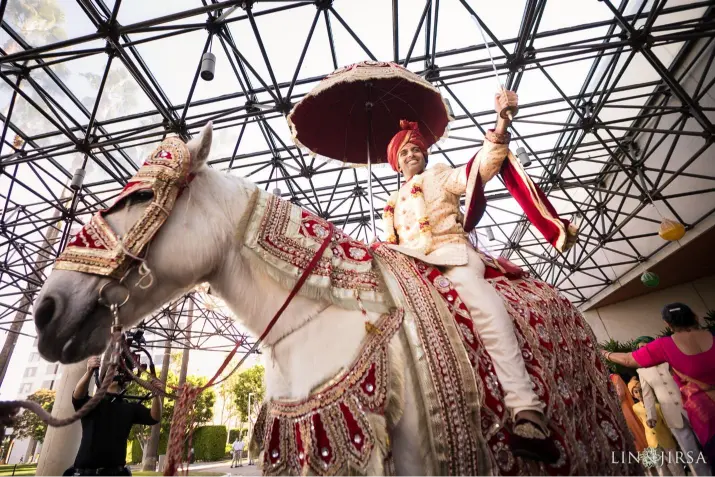
The Baraat is the groom's grand entrance on the wedding day, a moving celebration where the groom arrives surrounded by dancing family and friends, often accompanied by live dhol drummers. Planning a Baraat at an American venue requires advance coordination around sound permissions, procession routes, timing, and communication with venue staff.
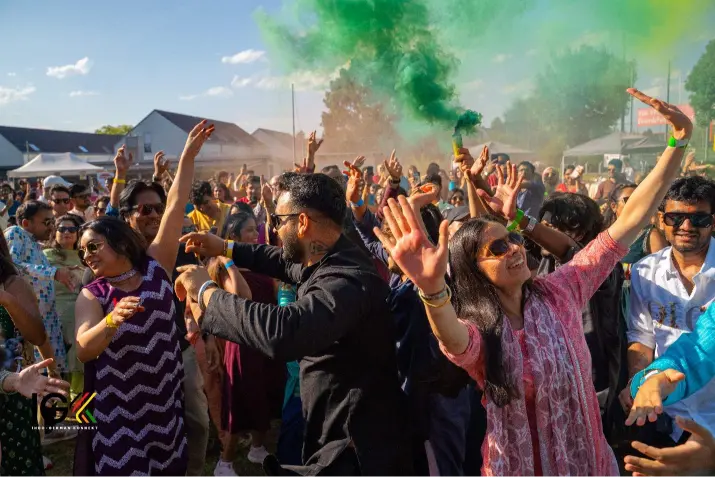
The Baraat is genuinely unlike anything else in wedding culture. The groom dancing through the streets or across a venue courtyard with his family, the dhol beating, everyone completely absorbed in the joy of the moment it sets the emotional temperature for everything that follows. When I've worked Baraats, I've seen guests who came expecting a standard wedding completely transformed by this arrival.
The planning side matters. American venues often have noise ordinances or specific rules about outdoor amplification. Procession routes need to be mapped in advance. Timing needs to be coordinated precisely with the bride's arrival and the start of the ceremony. These are logistics that experienced Indian wedding vendors have handled many times but they require real coordination rather than assumptions.
After the Baraat, the Milni takes place. This is the formal meeting of the two families, where elders exchange garlands or gifts as a sign of unity and respect. It's symbolic, meaningful, and often deeply moving for the families involved representing not just the joining of two people but of two families across generations.
The Hindu wedding ceremony is a deeply spiritual event conducted under a mandap, a sacred structure representing the universe by a priest. It includes the Kanyadaan, the lighting of the sacred fire, the Saptapadi (seven vows), and rituals like the application of Sindoor and the Mangalsutra that formally mark the couple as married.
Each ritual in a Hindu ceremony carries specific symbolic weight. The Kanyadaan where the bride's parents symbolically give their daughter in marriage is one of the most emotional moments for families. The Vivah Homa, or sacred fire ceremony, serves as the spiritual witness to the marriage. The Saptapadi, the seven steps taken together, is where the couple makes their vows each of the seven representing a different promise about love, respect, partnership, and spiritual growth.
In Indian-American weddings, couples often choose to have portions of the ceremony explained in English so all guests can follow along regardless of their familiarity with the traditions. Some couples incorporate personal vows or readings to blend tradition with modern elements. Both approaches are beautiful when done with intention. The ceremony runs long by American standards, planning for that in the timeline is essential, and communicating it to guests through programs or announcements helps everyone stay present rather than confused.
The two most emotionally significant post-ceremony traditions are the Aashirwad where elders and loved ones offer blessings and words of wisdom to the newly married couple and the Vidaai, the bride's formal farewell from her family, which is consistently one of the most moving moments of the entire wedding weekend.
The Aashirwad is a heartfelt gathering where the couple receives personal blessings from the people who love them most. Elders share wisdom, family members offer encouragement, and the exchange has an intimacy that the more public moments of the day don't always carry. The music in this window should be understated and warm, present enough to acknowledge the moment, quiet enough to let the conversations be the center.
The Vidaai is different. It's the moment the bride formally leaves her family home or in an American wedding context, formally departs from her family's side to begin her life with her partner. The tears during a Vidaai are real and deep, and the music needs to honor that rather than rush past it. Soft, emotional, traditionally resonant selections are what work here. Getting the music wrong at the Vidaai too upbeat, too Western, too loud is one of the clearest signs that a DJ doesn't understand the full emotional architecture of an Indian wedding.
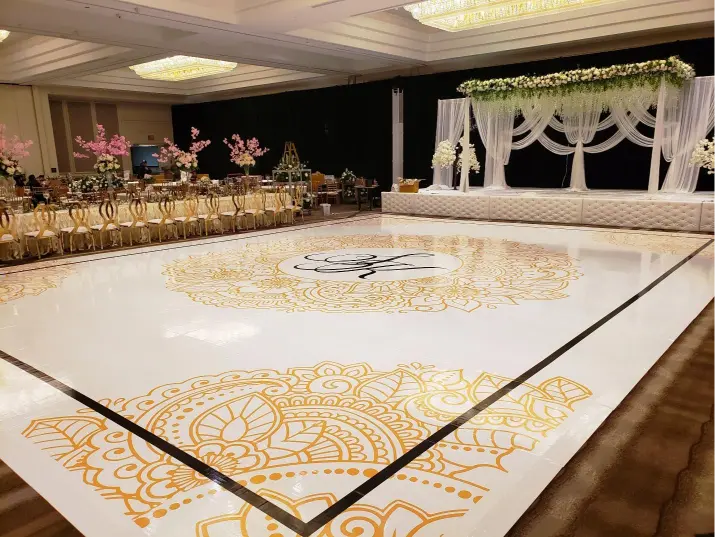
Indian wedding receptions in the United States blend the structure of an American reception grand entrances, first dances, parent dances, speeches, open dancing with strong cultural elements like Bollywood music, Bhangra, and a multi-generational dance floor that has to work for grandparents, aunties, college friends, and everyone in between.
The reception is where the weekend fully transitions into party mode, and for many guests it's also the most familiar phase of the celebration. Grand entrances are high-energy and choreographed. First dances carry the emotional weight they carry at every wedding. Parent dances are deeply meaningful. And the open dancing that follows needs to be inclusive of generations and cultures in a way that most American receptions simply don't have to manage.
A DJ who understands Indian weddings knows how to move between Bollywood hits, Punjabi and Bhangra music, classic Hindi film songs, R&B, hip-hop, and pop without the transitions feeling jarring or disconnected. The goal is a dance floor where a grandmother is comfortable dancing to something she loves and where the college friends are fully energized without anyone feeling like the music skipped past them. That balance is a skill that comes from experience with exactly this kind of event. Learn more about how we approach Indian wedding entertainment on the About page.
The most important planning considerations are timeline management (events consistently run longer than scheduled build in real buffers), venue vetting for fire ceremony permissions and multi-day access, sound flexibility for outdoor events and Baraat processions, and guest communication so everyone understands the meaning and flow of each ritual.
Timeline is the area where Indian weddings most commonly run into difficulty at American venues. Each ritual takes the time it takes, and compressing it to fit a catering company's preferred dinner window creates real problems. The solution is building generous buffers between events and communicating clearly with every vendor about what an Indian wedding timeline actually looks like in practice.
Venue vetting matters specifically because Hindu ceremonies involve a sacred fire the Vivah Homa and many American event venues have strict fire safety policies that can affect how this ritual is conducted. This is a conversation that needs to happen early in the planning process, not the week before the wedding. Sound permissions for the Baraat, multi-day venue access for the full weekend of events, and parking and flow logistics for large multi-generational guest counts are all venue conversations that need to happen specifically.
Guest communication through printed programs, announcements during the ceremony, or a brief explanation from a family member or officiant helps non-Indian guests feel included and present throughout rituals they may be experiencing for the first time. When guests understand what they're watching, they engage with it fully. When they don't, they quietly disconnect.
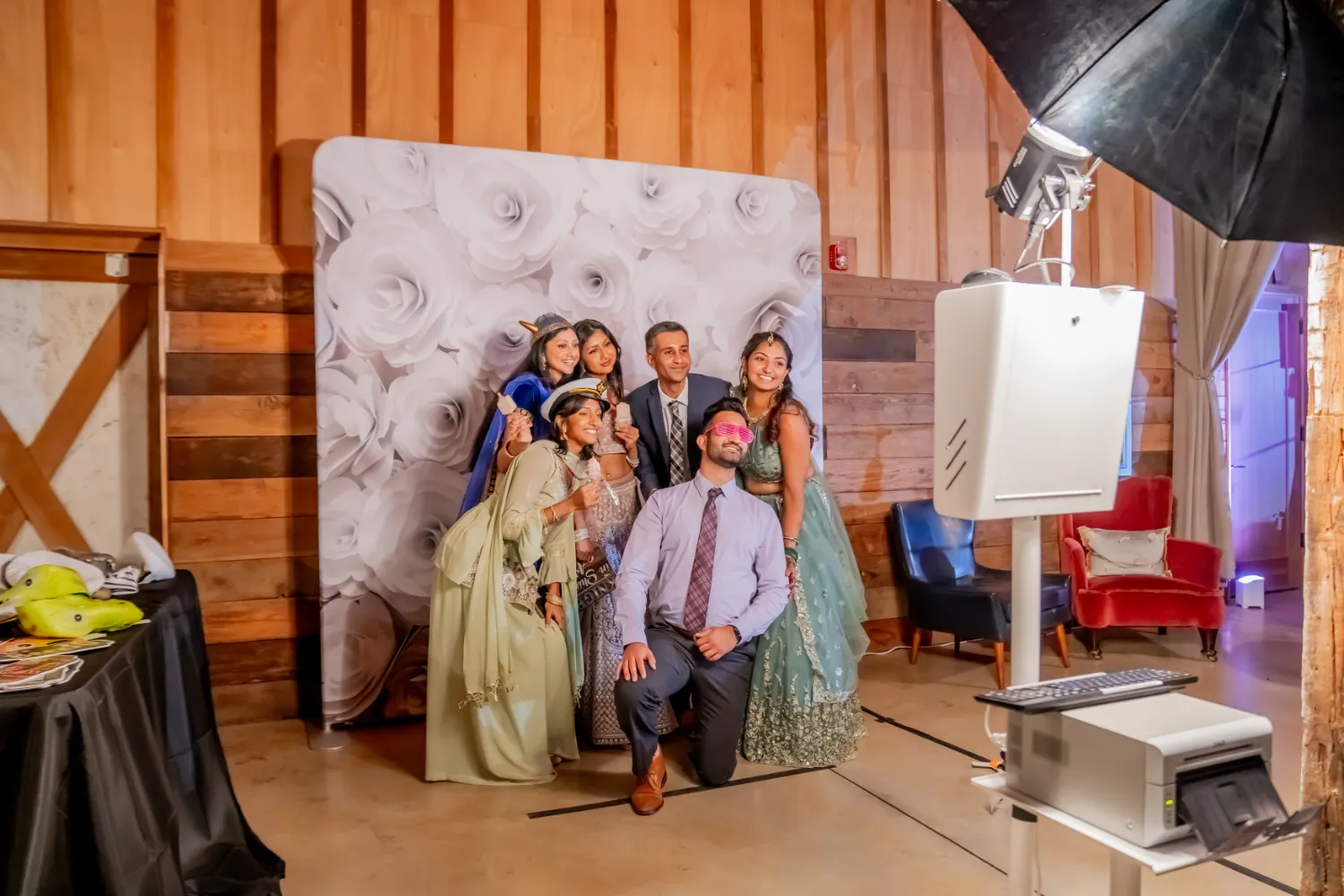
Special effects like Cold Sparks work exceptionally well at Indian wedding receptions particularly for grand entrances and Sangeet performances and Dancing on Clouds creates a stunning visual for first dances. Event lighting and a photo booth both add significant value to the full multi-day experience. Browse the photo gallery to see how these elements work at DJ Cutt Entertainment events.
Indian weddings are one of the most extraordinary celebration formats in the world. When traditions are honored thoughtfully and combined with the right music, the right pacing, and a vendor team that understands the full emotional architecture of the weekend, the result is something that guests Indian and non-Indian alike carry with them for the rest of their lives.
At DJ Cutt Entertainment, we understand that Indian weddings are not events. They are stories unfolding over several days, and every moment matters.
Request a Quote for Your Indian Wedding Tell me your events, your dates, and the traditions that matter most to you. I'll walk you through exactly how we approach Indian and Hindu wedding weekends and what a full entertainment plan looks like for your celebration.
Not ready yet? Browse the photo gallery to see past events, or explore our private event DJ services to understand the full range of what we bring to a multi-day wedding weekend.
A traditional Indian wedding weekend includes pre-wedding rituals like the Ganesh Puja and Mehndi ceremony, followed by the Sangeet or Garba night, then the wedding day itself with the Baraat, Milni, Hindu ceremony under the Mandap, Aashirwad blessings, and Vidaai farewell, and finally the reception. Each event has its own emotional tone, musical style, and logistical requirements.
Different events require different music. Devotional music is appropriate for the Ganesh Puja. Light Bollywood and acoustic Indian music works for the Mehndi. Sangeet nights blend Bollywood, hip-hop, pop, and EDM for performances and dancing. Garba and Dandiya nights use traditional Gujarati music. The Hindu ceremony uses devotional or classical Indian music. Receptions blend Bollywood, Bhangra, Punjabi, R&B, and other genres to engage all generations.
The Sangeet is a pre-wedding music and dance celebration, traditionally hosted by the bride's family, where both families participate in choreographed performances, tributes to the couple, and dancing. In modern Indian-American weddings it has evolved into one of the most anticipated events of the entire weekend and requires precise music cueing, microphone management, and a DJ experienced in Indian wedding entertainment.
The Baraat is the groom's grand entrance on the wedding day, featuring dancing family and friends often accompanied by live dhol drummers. Planning a Baraat at an American venue requires advance coordination around outdoor sound permissions, procession route logistics, timing alignment with other vendors, and confirmation of any venue-specific restrictions. Working with a DJ experienced in Indian weddings ensures these logistics are handled before the day.
Yes Hindu wedding ceremonies include a sacred fire ritual called the Vivah Homa, and many American event venues have strict fire safety policies that affect how this is conducted. Couples should confirm fire permissions with the venue early in the planning process. Multi-day access, sound flexibility for the Baraat and Sangeet, and parking logistics for large guest counts are other important venue conversations to have before signing a contract.
Indian wedding weekends typically span two to four days including pre-wedding rituals, the Sangeet or Garba night, the full wedding day, and the reception. Individual events regularly run longer than their scheduled times, so building generous buffer time into every transition is essential. Communicating the expected timeline clearly to all vendors and guests helps avoid confusion and keeps the weekend flowing smoothly.
Yes. DJ Cutt Entertainment has extensive experience DJing and coordinating Indian and Indian-American fusion weddings including Mehndi ceremonies, Sangeet nights, Garba and Dandiya celebrations, Baraat processions, Hindu wedding ceremonies, and multi-generational reception dance floors. We understand the full emotional and cultural arc of an Indian wedding weekend and bring the music expertise, equipment, and planning experience to make every event feel authentic and exceptional.
All in one service
Ready to talk details? Click one of the buttons below. Dates fill quickly, so don't wait to secure premier wedding entertainment!
Click "Book With Us" to check availability for a specific date
Get a customized price quote for your event.
Portland's most experienced wedding entertainment team
DJ Cutt Entertainment has been voted Best Wedding DJ by WeddingWire and The Knot. With over 20 years of experience creating incredible wedding moments, we serve Portland, Hood River, Oregon Coast, and throughout the Pacific Northwest.

I’m Alex Ramey, owner of DJ Cut Entertainment, and for the past 15 years I’ve had the privilege of working in the wedding industry, helping couples create celebrations that feel personal, seamless, and unforgettable. Over the years, I’ve seen firsthand how the right entertainment, thoughtful planning, and experienced guidance can shape the entire wedding day experience. As a writer, my goal is to help clients and future brides make better buying decisions before their wedding day, so they can invest wisely and avoid common mistakes. Through these blogs, I share what I’ve learned from years of real wedding experience to give couples honest insight, practical advice, and the confidence to create a wedding that feels authentic, fun, and meaningful.
.webp)
.webp)
.webp)
.webp)
%20(1).webp)
.webp)
.webp)