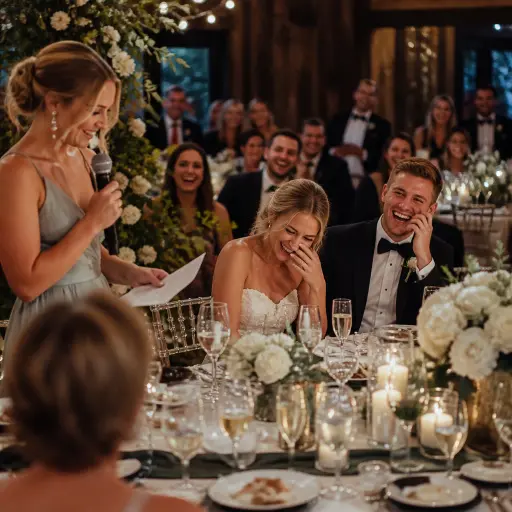
A wedding speech is often one of the most memorable parts of the reception, creating moments of laughter, reflection, and genuine connection. Whether you're the best man, maid of honor, parent, or the couple themselves, a great speech combines personal stories, authenticity, and emotion to leave a lasting impression on everyone in the room.
Wedding speeches are still one of the most unforgettable parts of a wedding day. They are the moments that make people laugh unexpectedly, cry harder than they planned, and feel the actual personality of the couple in the room. In 2026, there is a new layer to the process: AI. A lot of people are wondering whether to use it. The honest answer is that AI can absolutely help with wedding speeches, but it should not replace your voice. Use it as a structural tool, not a ghostwriter. The heart of the speech needs to stay yours. At DJ Cutt Entertainment, we see how much a strong speech shapes the energy of an entire reception. The best ones are not the most polished. They are the most personal.
A wedding speech gives guests context to the couple's story, adds personality to the day, creates genuine emotional moments, and produces some of the most memorable lines anyone will carry from the celebration. From a DJ and reception flow standpoint, a strong speech can set up the entire second half of the evening.
Great speeches break up the structure of the reception with something meaningful. They give people a memory they will carry long after the cake is gone. The father who says something unexpectedly tender. The maid of honor who tells one perfect story. The best friend who makes the room lose it laughing and then lands a line that hits everyone in the chest.
At DJ Cutt Entertainment, speeches are not just something that happens during dinner. They are part of the flow. A strong speech creates natural emotional momentum that carries into dancing. When they are delivered well and land cleanly, the reception feels complete. When they run too long or feel generic, the energy takes work to rebuild. Learn more about how we approach reception flow on the About page.
The traditional lineup includes the couple, parents, maid of honor, and best man, but in 2026 weddings are far more flexible. What matters most is not following a rigid rule. It is making sure the people speaking actually have something meaningful to say, and keeping the total number tight so speeches add to the evening rather than drag it.
Too many speeches will exhaust the room regardless of their individual quality. A general guideline is three to four total. Beyond that, even good speeches start to feel like something guests are waiting through rather than genuinely listening to.
The people who should give speeches are the ones who have a specific story or perspective that nobody else in the room could offer. Not everyone who loves the couple needs to speak. Sometimes the most meaningful contributions come from restraint: fewer voices, each one with something real to say.
Yes, but only as a tool for structure, clarity, and cleanup, never as the author of your emotions or your memories. AI can help you organize raw thoughts, trim length, smooth transitions, and improve phrasing. It should not invent stories you did not live, generate inside jokes that are not actually yours, or replace your voice with generic sentiment.
The distinction that matters is using AI to shape material rather than create it. Start with your own unfiltered notes. No prompts, no chatbot. Just your actual thoughts about the couple, your favorite memory, what changed when they met each other, and what you hope for their future. Once you have that raw material, AI can help you turn it into a cleaner, more focused speech without removing the heart of what you actually wanted to say.
People can hear when a speech is too generic. Even if they cannot explain why, they feel when a speech sounds smooth but not lived-in. That is the real line: AI for structure, your voice for everything that matters.
Do not use AI when the relationship is deeply personal and nuanced, when your humor or storytelling personality is part of why people love hearing from you, when the speech touches on grief or significant family history, or when you are tempted to over-polish something that works better because it is honest rather than perfect.
AI tends to flatten nuance. It defaults to broadly acceptable emotional language instead of specific truth, which is the opposite of what makes a speech genuinely memorable. If you are a sibling, lifelong friend, or parent, you already have the material. The challenge is not finding content, it is choosing the right content from everything you already know.
Some speeches become too "nice" when AI is involved. Too neat. Too processed. The best wedding speeches are not perfect. They are personal. A slightly imperfect phrase spoken with genuine feeling will always land harder than a polished line that sounds like it came from a template.
Start with who you are, share one strong specific memory, bring in the partner so the speech feels about the couple rather than just one person, say what you genuinely admire, and close with a short clean toast. That is the whole structure and you do not need to overcomplicate it.
Great speeches still follow a simple arc: who you are, one true story, the couple together, something real you want to say to them, and a toast. The most common mistake is spending the entire speech talking about your history with one person and barely mentioning who they married. The room wants the relationship. They already know the backstory.
Say it out loud as you write. If you would not say it in a natural conversation, cut it. Use specific details rather than general statements. "She lights up every room she walks into" tells the room nothing. "She is the person who still remembers what you were stressed about three weeks ago" tells them exactly who she is.
Visit our music page to understand how speeches fit into the overall reception timeline, including which music cues work best before and after the toast sequence.
About 3 minutes is ideal. Under 5 minutes is the ceiling for almost everyone. A shorter speech with one great story will land harder than a long speech with six average ones. Longer is almost never better.
For practical guidance: 2.5 to 4 minutes works for most speakers. 5 minutes maximum for a parent or someone with a very strong story and the confidence to hold the room. Under 2 minutes if you are nervous and want to keep it clean and simple.
Most people speak at roughly 130 words per minute. That puts a 3-minute speech at around 390 words and a 5-minute speech around 650 words. Write it out and read it aloud with a timer before the wedding day. What feels like 3 minutes while writing often turns into 7 minutes at a microphone, especially because people naturally rush when nervous.
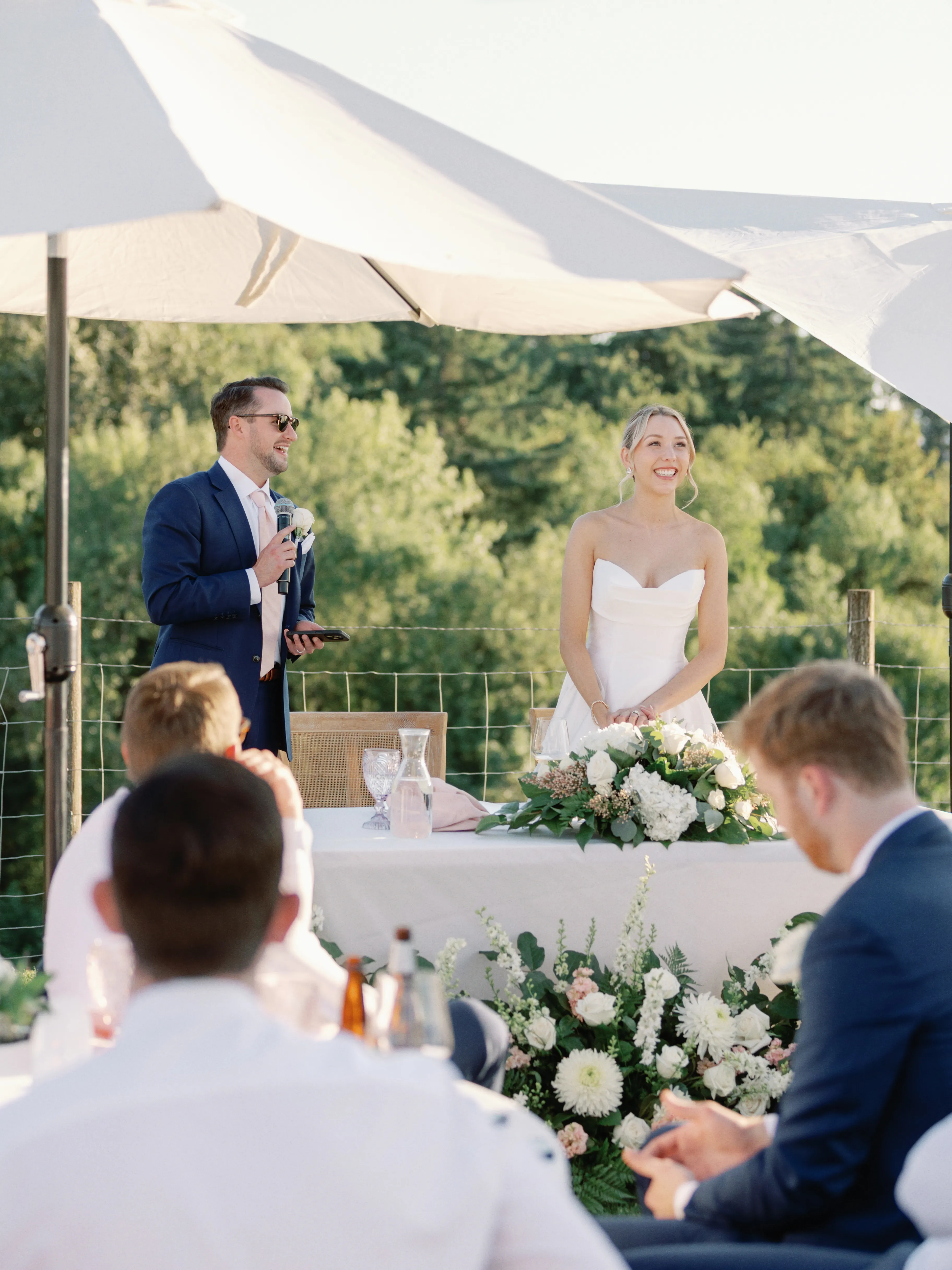
Most speeches happen during dinner service in reception rooms that are lit for ambience rather than visibility. Dim romantic lighting that looks beautiful in the room can create major problems for capturing the speaker's face, the couple's reactions, and the emotional detail of the moment on video and in photos.
This is one of the most consistently overlooked details in wedding planning. Couples spend significant time on florals, table settings, and mood, but rarely think about whether the speech location and lighting will allow photographers and videographers to capture what is actually happening.
Good lighting during speeches matters for seeing the speaker's face clearly, capturing the couple's reactions in real time, and preserving the full emotional atmosphere of the moment rather than losing it to shadows. Event lighting positioned thoughtfully for dinner and speech moments does not need to be bright or intrusive. It needs to be intentional.
The fix is usually not complicated, but it should be planned before the day. The conversation between the DJ, venue, and videography team about where the speaker will stand, where the couple will be seated, and what front-facing light will exist during speeches protects the moment from becoming something that gets lost in the edit.
Avoid stories that would embarrass the couple in front of the room, any mention of exes, inside jokes that exclude everyone else, too much setup before getting to the point, rambling through multiple stories, and overdrinking before you speak. You do not need to be the funniest person in the room. You need to be genuine, clear, and respectful.
A common trap is trying to get big laughs at the couple's expense. Gentle humor rooted in affection works. Roast comedy does not belong at a wedding toast. The couple will remember how they felt during that speech for the rest of their lives. Make sure what they feel is love rather than relief that it is over.
Overly long thank-you sections are also worth avoiding. Thanking every vendor, every relative, and everyone who traveled from out of town eats time and loses the room. Keep thank-yous short and personal rather than comprehensive. The speech should be about the couple, not a list.
A great speech on paper can still fall flat if it is delivered too fast, too quietly, or without pauses. People tend to speak faster when handed a microphone than they do at home. Practice helps you hear what sounds unnatural, find awkward spots, slow down your pacing, and figure out where to pause for laughter or emotion.
Read it out loud at least three times. More if you tend to rush. Print it or bring notes. There is no prize for memorizing it if doing so makes you more nervous. Holding notes is completely normal and better than freezing mid-speech because you lost your place.
Practice is also how you discover which parts to cut. The sections that feel long when you read them aloud are the sections guests will feel long too. A speech that has been practiced arrives at the reception feeling familiar to the speaker, which comes through as calm and genuine rather than anxious and hurried.
At DJ Cutt Entertainment, speeches are part of how we think about reception flow from the very beginning of the planning conversation. When are they happening, who is speaking, where will the speaker stand, what is the lighting situation, how does the pacing transition into dancing afterward. All of that matters and all of it is plannable.
If you want a reception that flows beautifully from the first toast through the last song, let's build it together.
Start Planning Your Wedding With DJ Cutt Entertainment Tell me your date, your venue, and what kind of evening you are envisioning. We will help design a reception timeline where the speeches land, the transitions feel smooth, and the energy builds the way it should.
Not ready yet? Browse the photo gallery to see how well-planned receptions come together at real events, or explore private event DJ services to understand everything we bring to a wedding day.
Yes, as a tool for structure, clarity, and cleanup. AI can help you organize raw thoughts, trim length, smooth transitions, and improve phrasing. It should not invent emotions you do not feel, create stories you did not live, or replace your voice with generic sentiment. Start by writing your own raw material, then use AI to shape it into a cleaner draft.
About 3 minutes is ideal for most speakers. Under 5 minutes is the ceiling. A shorter speech with one genuinely great story will consistently land harder than a longer speech with multiple average ones. Most people speak at roughly 130 words per minute, making a 3-minute speech approximately 390 words.
A short introduction establishing who you are, one or two specific memories that reveal something true about the couple, acknowledgment of both people in the relationship together, something you genuinely admire, and a clean closing toast. The most common structural mistake is spending the whole speech on one person and barely mentioning who they married.
Three to four is generally the comfortable range. Beyond that, even individually good speeches start to feel like something guests are waiting through rather than fully engaged with. Prioritize speakers who have something specific and personal to say that nobody else could offer.
Most speeches happen during dinner in rooms lit for romantic ambience rather than visibility. Dim lighting that looks beautiful in person can make it difficult to capture the speaker's face, the couple's reactions, and the full emotional detail of the moment on video and in photos. Discussing speech lighting with your DJ and venue early prevents the moment from getting lost in the edit.
Read it out loud at least three times, more if you tend to rush under pressure. Practice helps you hear what sounds unnatural, find sections to cut, slow down your pacing, and arrive feeling calm rather than anxious. Print the speech or bring notes. Holding notes is completely normal and better than freezing when nervous.
All in one service
Ready to talk details? Click one of the buttons below. Dates fill quickly, so don't wait to secure premier wedding entertainment!
Click "Book With Us" to check availability for a specific date
Get a customized price quote for your event.
Portland's most experienced wedding entertainment team
DJ Cutt Entertainment has been voted Best Wedding DJ by WeddingWire and The Knot. With over 20 years of experience creating incredible wedding moments, we serve Portland, Hood River, Oregon Coast, and throughout the Pacific Northwest.
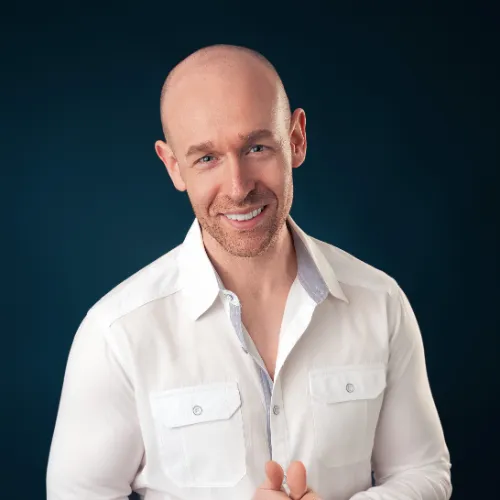
I’m Alex Ramey, owner of DJ Cut Entertainment, and for the past 15 years I’ve had the privilege of working in the wedding industry, helping couples create celebrations that feel personal, seamless, and unforgettable. Over the years, I’ve seen firsthand how the right entertainment, thoughtful planning, and experienced guidance can shape the entire wedding day experience. As a writer, my goal is to help clients and future brides make better buying decisions before their wedding day, so they can invest wisely and avoid common mistakes. Through these blogs, I share what I’ve learned from years of real wedding experience to give couples honest insight, practical advice, and the confidence to create a wedding that feels authentic, fun, and meaningful.
.webp)
.webp)
.webp)
.webp)
%20(1).webp)
.webp)
.webp)