
Hood River, Oregon is one of the most sought-after wedding destinations in the Pacific Northwest, offering breathtaking Columbia River Gorge views, unique venues, and unforgettable guest experiences. From where your guests stay to how your reception flows, every detail matters and the right entertainment plan is what brings it all together.
After 15 years of DJing and hosting weddings throughout Portland and the Pacific Northwest, I can say with confidence that the weddings people remember most aren't just beautiful, they're interactive. The ones where guests felt like they were part of something rather than watching it happen. Most couples worry that games will feel cheesy or forced. In reality, it's not about the game, it's about how and when it's done. One or two well-executed interactive moments woven intentionally into the timeline will break the ice, energize the room, and give guests permission to have fun long before the dance floor opens.
Wedding games work when they shift guests from passive observers into active participants, create shared moments of laughter and connection that bond the room together, and solve one of the most common reception problems: dead space. The key is moderation and timing. One or two well-executed games will always outperform five rushed or poorly explained ones.
Before jumping into specific ideas, it's worth understanding what makes interactive moments succeed at weddings versus fail. The best wedding games do three things consistently. They give guests who aren't natural dancers a way to engage with the celebration. They create inside jokes and spontaneous reactions that bring the room together organically. And they fill the windows in a reception timeline where energy tends to drop the dinner service lag, the room flip, the awkward stretch before dancing starts without making the night feel like a scheduled activity list.
The couples who get this right don't do it by picking the most elaborate game. They do it by choosing one or two moments that genuinely match their personalities, placing them at the right point in the timeline, and letting a DJ who knows how to read the room execute them properly. That's when interactive moments feel natural rather than forced.
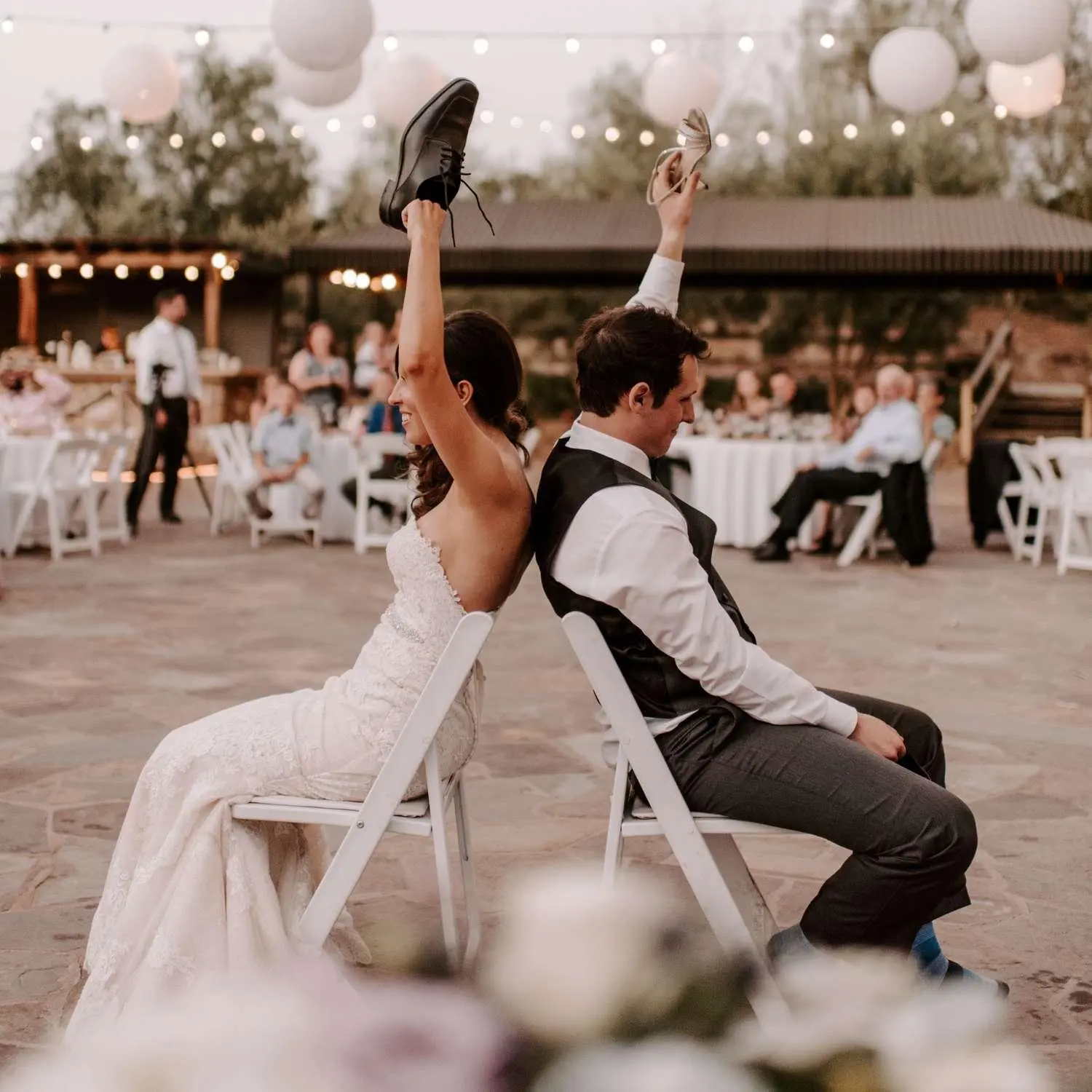
The Shoe Game is a classic reception activity where the couple sits back-to-back, each holding one of their own shoes and one of their partner's, and answers lighthearted questions from the DJ by raising the appropriate shoe. It's short, visual, inclusive, and almost always produces genuine laughter.
The Shoe Game has survived decades in wedding culture for a reason. It's entirely about the couple, requires zero participation from guests beyond watching and laughing, and the humor comes naturally without any setup. Questions like "Who takes longer to get ready?" or "Who's the better cook?" are universally relatable, and watching the couple's answers diverge in real time is reliably funny regardless of the crowd.
It's also flexible. You can keep it PG and sentimental, lean slightly spicy depending on the guest list, or mix both. The most important rule is to keep it under five to seven minutes. Leave people wanting more rather than checking their watches. A Shoe Game that runs ten minutes because someone added too many questions is the version couples regret. A tight, well-paced version is one of the easiest audience wins in a reception timeline.
Wedding trivia is one of the most effective whole-room engagement tools available at a reception because it rewards guests who know the couple well, sparks conversation at tables, and creates organic competitive energy without requiring anyone to leave their seat or get on the dance floor.
Questions can cover where the couple met, who said "I love you" first, what the first trip together was, or what song played during a significant private moment. Running it as table versus table, left side versus right side, or bridal party versus everyone else adds a competitive layer that gets the room vocally involved.
The most effective variation I use as a DJ is releasing dinner tables by trivia performance. Correct answers get dismissed first. Suddenly a routine moment waiting to go through the buffet line becomes a game instead of a logistical inconvenience. Guests who knew nothing about the couple five minutes earlier are now invested in winning their table's spot at the front of the line. That's the kind of low-stakes competitive energy that makes a reception feel alive.
Bridal party versus groomsmen games work because guests already know and care about these specific people. The moment sides are announced, the room picks teams instantly and the energy level jumps. Speed trivia, memory challenges, and timed tasks keep it competitive and short without requiring complicated rules.
Examples that work well include quick-round trivia about the couple, balloon pop races, and memory challenges where participants list shared moments, songs, or dates. The common thread is that each format produces visible results and clear winners fast which keeps the audience's attention without dragging the moment out.
The timing note matters here. This game works best earlier in the reception before alcohol has significantly affected coordination and attention spans. A bridal party showdown at 10pm against a bridal party showdown at 7pm produces two very different results. Plan it early, keep it to two or three quick rounds, and end it before it overstays its welcome.
Name That Song where the DJ plays ultra-short three to five second clips and guests compete to identify them works because music is universal. Even guests who will never step foot on the dance floor will participate verbally, and it subtly warms the entire room up for open dancing without announcing that it's doing so.
Themes can be built around decades, genres, or shared memories relevant to the couple. The format is flexible enough to run as individual competition, table teams, or the most fun variation DJ versus guests, where the crowd tries to stump the DJ with requests or obscure song intros. That version humanizes the DJ, turns them into part of the show rather than background infrastructure, and genuinely loosens up guests who might still be feeling formal.
The transition out of this game into open dancing feels organic rather than abrupt because the room has already been thinking about music for several minutes. That's the kind of intentional setup that makes a dance floor open strong instead of having the DJ fight for the first ten minutes to get people out of their seats.
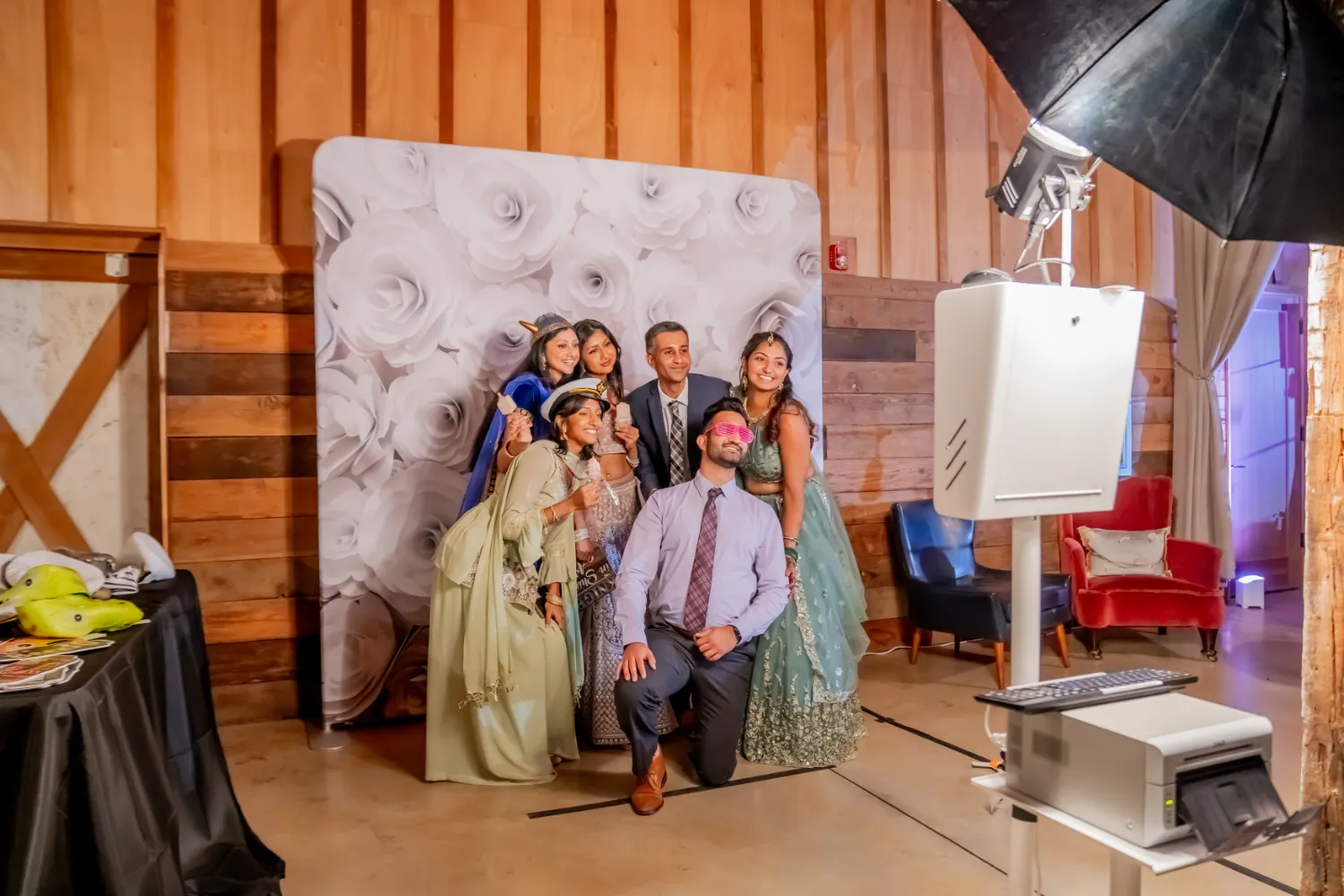
Photo Dash is a reception game where the DJ announces a list of photo challenges: a photo with the couple's grandparents, a group selfie with college friends, a picture with someone wearing a specific color and guests race to complete them. It encourages movement, creates incredible candid photos, and pulls people out of their seats naturally.
The key to running Photo Dash well is clear rules and a short time limit. Without those two things, the game creates the kind of chaos that spills into service areas, disrupts vendor timelines, and puts staff in an uncomfortable position. With them, it's one of the most genuinely fun twenty-minute stretches in a reception.
Done correctly, Photo Dash also solves a problem most couples don't think about until after the wedding the candid photos from the reception are almost all of the same groups in the same spots. Photo Dash sends people across the room, creates moments with people who wouldn't normally interact, and gives photographers material that looks completely natural because it is.
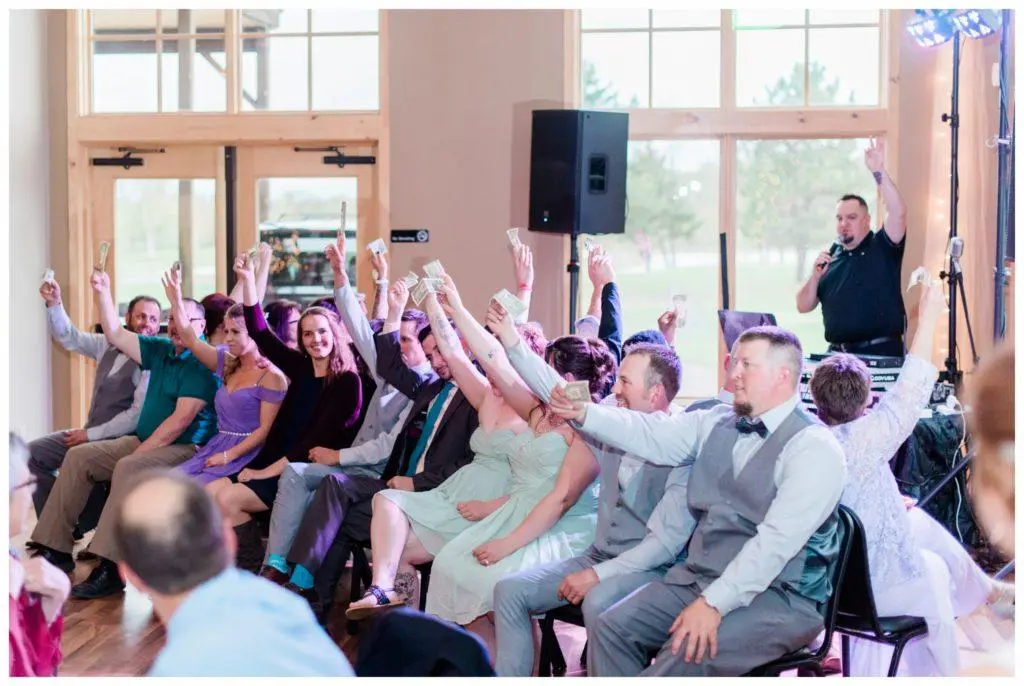
The best dinner games are soft, low-pressure, and table-specific trivia table cards, conversation prompts about the couple, or table challenges like "best toast idea" or "best dance move to demonstrate later." The goal is light engagement that keeps tables energized, not activities that require shouting across the room.
Dinner is where reception energy tends to dip, and the temptation is to overcompensate with a loud centerpiece game or an announcement that forces everyone to stop eating. That approach almost always backfires. The better strategy is quiet, self-directed engagement at each table that gives guests something to think about and talk about during a natural conversational lull.
As a DJ I'll weave these moments into light announcements so they feel intentional rather than intrusive: a brief mention of the table card challenge, a reminder that the results will be shared before dancing starts. That framing gives the activity stakes without demanding immediate full-room attention during a phase of the evening when people are focused on their meals and their conversations.
Once dancing starts, games should feel like extensions of the party rather than interruptions of freeze dance, genre switch challenges, call-and-response dance moves, and dance-offs between tables or family groups. These formats amplify the music rather than stopping it, and they give guests who are nervous about dancing a sense of structure and permission to join in.
The biggest distinction between cocktail hour games and dance floor games is that dance floor versions should never stop the music. The moment the floor goes quiet to explain rules or set up a game, you've broken the momentum that took effort to build. Dance floor games work because they happen inside the energy rather than pausing it: a freeze instruction over the music, a call to switch genres mid-song, a table-versus-table challenge that plays out while the dancing continues.
These are also the moments where a DJ's ability to read the room matters most. The same game that's electric at 9:30pm when the floor is packed can fall completely flat at 8pm when people are still loosening up. Knowing which game to run and exactly when to run it is what separates a DJ who hosts from a DJ who just plays songs.
The games that work across all generations are the ones where participation is optional and observation is just as fun. Anniversary dances, generational music battles, family trivia moments, and group photo challenges all work universally because they give grandparents and college friends equal ways to engage without putting anyone on the spot.
Anniversary dances deserve special mention here because they do something none of the other games do. They honor the people in the room who have already built what the couple is just beginning. Calling up everyone who has been married over a year, then five years, then ten, then twenty, until the longest-married couple is the last one standing, consistently produces one of the most emotional and genuinely beautiful moments of any reception. It requires no game mechanics at all. It just requires intention.
Multi-generational moments are also what make older guests feel genuinely included in a celebration that can otherwise feel designed primarily for the couple's friends. When a grandparent wins a trivia question or gets called out during an anniversary dance, the whole room reacts. That reaction is worth more than any planned entertainment moment, and it costs nothing to create.
Avoid games with complicated rules, back-to-back activities that exhaust guests' attention, anything that embarrasses people who didn't volunteer, and inside jokes that only a handful of guests will understand. Games should elevate the experience for everyone in the room, not create moments that half the room is waiting to be over.
The most common mistake I see is couples adding too many games because they found a list online and thought more was better. The result is a reception that feels like a birthday party for children structured, scheduled, and exhausting. One or two well-chosen games placed at the right moments in the timeline will always outperform five games crammed into dinner.
The second most common mistake is choosing games that put specific guests in uncomfortable situations without their consent. The goal of interactive moments is for every person in the room to feel included and have fun, not for a few people to feel put on the spot while everyone else watches. Games that rely on humiliation or surprise embarrassment for their humor have no place at a wedding regardless of how well the couple thinks it will land.
A timeline that consistently works is: trivia or photo dash during cocktail hour, soft table games during dinner, the Shoe Game or bridal party showdown post-dinner before dancing, and music-based games only once the dance floor is open. Each game type matches the energy level of the moment it occupies.
Cocktail hour is the ideal window for higher-energy interactive moments because guests are mobile, social, and still at full attention. Dinner is for softer, table-specific engagement that supports conversation rather than competing with it. The post-dinner window before dancing opens is where centerpiece games like the Shoe Game land best. The room is full, focused, and ready to be entertained before the formal structure of the evening releases entirely.
Once dancing starts, the only games that belong are ones that happen inside the music. Stopping the floor to explain a new game at 10pm is how you lose the momentum you spent two hours building. A good DJ doesn't just know what games to run, they know exactly where each one belongs in the night's arc. That's the difference between a DJ who provides music and a DJ who produces an experience.
The most memorable weddings are designed with intention. Interactive games done correctly don't make a wedding feel less elegant, they make it more human. They give guests permission to laugh, connect, and celebrate together. And when the DJ executing those moments knows how to read the room, they feel like organic highlights rather than scheduled activities.
If you want help choosing games that match your guest count, your venue layout, and your timeline that's exactly the kind of conversation we have at DJ Cutt Entertainment.
Request a Quote for Your Wedding Tell me your guest count, your venue, and what kind of energy you want guests to feel. I'll help you design a timeline with the right interactive moments built in.
Not ready yet? Learn more about how we approach weddings on the About page, or explore our private event DJ services to see everything we bring to a reception beyond just music.
The most consistently effective wedding reception games are the Shoe Game, wedding trivia, Name That Song, Photo Dash, and anniversary dances. Each works because it requires minimal explanation, produces natural laughter or emotion, and can be scaled to fit any guest count or timeline. The best choice depends on your crowd, your personality as a couple, and where the game falls in your reception timeline.
One to two well-executed interactive moments will outperform five rushed or poorly explained games every time. More games do not produce more fun, they produce more confusion, more dead air between activities, and guests who feel like they're being managed rather than celebrated. Pick one or two that genuinely fit your personalities and let the rest of the night breathe.
The Shoe Game is a reception activity where the couple sits back-to-back, each holding one of their own shoes and one of their partner's. The DJ asks lighthearted questions and each person answers by raising the appropriate shoe. It's short, visual, requires no guest participation beyond watching, and produces natural laughter from the couple's answers diverging. Keep it under seven minutes for maximum impact.
Cocktail hour works well for trivia and photo challenges when guests are mobile and social. Dinner is better for soft table-specific activities. The Shoe Game and bridal party showdowns work best post-dinner before dancing begins. Music-based games like Name That Song and dance challenges belong only after the dance floor is already open. Timing each game to match the energy level of the moment is what makes them land.
Anniversary dances, wedding trivia, generational music battles, and group photo challenges all work well across multiple generations because participation is optional and observation is equally engaging. Anniversary dances specifically honor the longer-married guests in the room and consistently produce some of the most emotional moments of any reception regardless of guest age range.
They can but only when they're the wrong game for the crowd, explained poorly, placed at the wrong moment in the timeline, or run too long. When games are chosen to match the couple's personality, placed intentionally in the right window of the night, and executed by a DJ who knows how to read the room, they feel like organic highlights rather than scheduled activities. The game itself matters less than the execution.
All in one service
Ready to talk details? Click one of the buttons below. Dates fill quickly, so don't wait to secure premier wedding entertainment!
Click "Book With Us" to check availability for a specific date
Get a customized price quote for your event.
Portland's most experienced wedding entertainment team
DJ Cutt Entertainment has been voted Best Wedding DJ by WeddingWire and The Knot. With over 20 years of experience creating incredible wedding moments, we serve Portland, Hood River, Oregon Coast, and throughout the Pacific Northwest.

I’m Alex Ramey, owner of DJ Cut Entertainment, and for the past 15 years I’ve had the privilege of working in the wedding industry, helping couples create celebrations that feel personal, seamless, and unforgettable. Over the years, I’ve seen firsthand how the right entertainment, thoughtful planning, and experienced guidance can shape the entire wedding day experience. As a writer, my goal is to help clients and future brides make better buying decisions before their wedding day, so they can invest wisely and avoid common mistakes. Through these blogs, I share what I’ve learned from years of real wedding experience to give couples honest insight, practical advice, and the confidence to create a wedding that feels authentic, fun, and meaningful.

.webp)
.webp)
.webp)
.webp)
%20(1).webp)
.webp)
.webp)